

Posted On: March 07, 2026
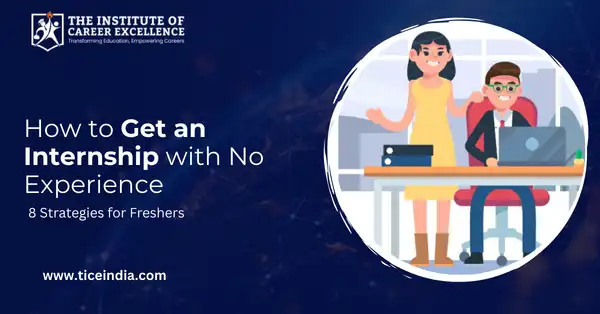
How to Get an Internship with No Experience: 8 Proven Strategies for Freshers in India
You need experience to get an internship. But you need an internship to get experience. Sound familiar? If you are a fresher trying to break into the job market, this loop can feel impossible to escape.
Here is the truth — every working professional you know was once in your exact position. The ones who got ahead were not the ones with the longest resumes. They were the ones who knew how to position themselves smartly.
This guide gives you 8 real, actionable strategies to land your first internship — even if your resume is completely blank.
Why Internships Matter More Than Your Degree
Employers today do not just want a certificate. They want proof that you can work. An internship gives you that proof. It helps you build real skills, understand workplace culture, grow your professional network, and — most importantly — gives you something concrete to talk about in every job interview you walk into. Students who complete internships are significantly more likely to receive full-time job offers than those who do not.
1. Build a Resume That Reflects Your Potential, Not Just Your Past
A blank work history does not mean a blank resume. Recruiters reviewing fresher applications look for signs of initiative and ability — not years of corporate experience.
Include your academic projects, college events you organised, online courses you completed, tools you know, and any personal work — a blog, a mock campaign, a photography portfolio. Frame every item around what skill it demonstrates.
At TICE, every student builds a project-backed resume before applying for placements. It makes a measurable difference.
2. Write a Cover Letter That Does the Heavy Lifting
Most freshers skip the cover letter. That is a mistake. When you have no work experience, the cover letter is your chance to explain why you want this specific role, what you bring to the table right now, and how quickly you learn. Keep it to three short paragraphs. Be direct. Avoid generic lines like "I am a hard-working individual." Tell a small, specific story instead — a project you took on, a problem you solved, a result you got.
3. Use Your Network Before You Use Job Portals
Most internships are filled through referrals before they are ever posted publicly. Your network is your fastest route in.
Start with your college professors — they often have direct connections with companies and agencies. Talk to seniors who are already placed. Reach out to alumni on LinkedIn. Tell your family. You are not being pushy. You are doing exactly what professionals do at every stage of their career.
4. Know Where to Apply — and Apply Smart
The right platforms for freshers in India:
- Internshala — best for students and freshers specifically
- LinkedIn — apply directly, connect with hiring managers
- Naukri.com — good for IT and marketing roles
- Company career pages — apply before the role gets listed elsewhere
Do not mass-apply to everything. Personalise each application with a mention of the company and why the role makes sense for you. Ten targeted applications beat 100 generic ones every time.
5. Target Startups and Small Businesses First
Large corporations often have rigid requirements. Startups and small agencies are different — they care far more about attitude, curiosity, and willingness to work than about years of experience. As a fresher, you will also get more hands-on responsibility at a smaller company than you would at a large firm where interns spend months on administrative tasks. Look for growing companies in your city, approach local marketing agencies, reach out to founders directly on LinkedIn.
6. Add Certifications to Back Up Your Skills
A relevant certification tells an employer two things: you have the skill, and you took the initiative to learn it. That matters.
Certifications worth adding to your profile:
- Google Digital Garage — free, widely recognised
- HubSpot Academy — marketing, sales, and content courses
- Meta Blueprint — for social media and ads
- TICE's Advanced Digital Marketing Course — hands-on, industry-aligned, with placement support
At TICE, students earn course-specific certificates alongside ISO-standardised credentials. These go directly on their resumes before they sit for a single interview.
7. Build a Portfolio with Your Own Projects
You do not need a client to build a portfolio. You need proof of skill — and you can create that yourself.
Some ideas that actually work:
- Run a mock social media campaign for a brand you like
- Build a personal website or blog
- Do an SEO analysis on a local business and write up what you found
- Create a case study from your college project or event work
When an interviewer asks "what have you done?", you will have a real answer — not just a list of subjects you studied.
8. Volunteer or Freelance to Get Your First Real Experience
Unpaid or low-paid work is not ideal long-term, but for three to six months as a fresher, it can be the exact thing that breaks the experience loop.
Offer to manage social media for a local NGO, a neighbourhood shop, or a friend's business. Freelance a small logo design, write a few blog posts, or run one Meta ad campaign. Even micro-projects show you can deliver — and that proof is worth more than a certification on its own.
Quick Tips Before You Apply
- Apply early — most internship spots fill up 4 to 6 weeks before the start date
- Follow up after applying — one polite email a week after submission shows intent
- Prepare for interviews with mock sessions — TICE students do this before every placement round
- Do not ignore unpaid internships at reputed companies — the experience and reference can be worth more than a paid role at a lesser-known firm
The First Step Is Always the Hardest
No experience is not a wall. It is a starting point. Every recruiter knows that freshers come without work history — what they are actually testing is whether you have taken your preparation seriously.
If you apply the eight strategies in this article — build your resume around skills, personalise your applications, network early, target the right companies, earn relevant certifications, and create your own portfolio — you will stand out from the majority of candidates applying for the same roles.
At TICE, we have helped hundreds of students go from zero experience to their first job in under six months. The process works. You just have to start.
Frequently Asked Questions
Can I really get an internship with zero work experience?
Yes. Many companies specifically hire freshers for internship roles. The key is showing that you have relevant skills — through certifications, personal projects, or college work — rather than paid job history.
Which platform is best for freshers to find internships in India?
Internshala is the most fresher-friendly platform in India. LinkedIn is equally important for networking and direct outreach. Use both actively, and also check company career pages directly.
Should I apply for unpaid internships?
In the short term, yes — if the company is reputed and the work is genuinely hands-on. An unpaid internship at a well-known agency gives you experience, a reference, and portfolio material. Just make sure you are learning, not just doing admin tasks.
How long should a fresher's resume be?
One page. Recruiters spend less than 10 seconds on an initial resume scan. Keep it focused, clean, and relevant. A tight, well-organised one-pager is always stronger than a two-page resume with filler content.
How does TICE help students get internships?
TICE provides a 3-month internship as part of its courses, along with resume building, mock interviews, certifications, and access to a job portal with verified company listings. Students graduate with real project experience and placement support — not just a certificate.
Article Author

Arka Banerjee
Managing Director at TICE
Arka Banerjee is the Director at Arobit Business Solutions Pvt. Ltd., where he leads TICE (The Institute of Career Excellence), a premier IT training institute in Kolkata. With over a decade of experience in digital transformation, B2B marketing, and performance marketing, Arka has been instrumental in bridging the gap between academic knowledge and industry requirements.
Tags
Latest Posts
-

10 Highest-Paid Digital Marketing Skills in Demand in 2026
-
Short-Term Website Development Courses That Lead to Jobs
-
Why India’s Tech Industry Struggles to Produce Visionary Leaders: A Skills Gap Perspective
-
Best Certification Courses After 12th for a Career in IT
-
What is Off-Page SEO Optimization? Complete Guide to Building Authority and Rankings
Similar Posts
-
Best Certification Courses After 12th for a Career in IT
-
10 Best Digital Marketing Courses in Kolkata for 2025
-

Digital Marketing vs MBA: Which Career Path Offers Better Growth in 2025?
-
How to Get Your First IT Job Without Experience in 2025
-
Why TICE India is Shaping the Future of Digital Careers: A Closer Look